Liquid Class Properties
Opentrons-verified liquid classes are based on the properties of common liquids: water, ethanol, and glycerol.
| Opentrons-verified liquid class | Description | Load name |
|---|---|---|
| Aqueous | Based on deionized water | water |
| Volatile | Based on 80% ethanol | ethanol_80 |
| Viscous | Based on 50% glycerol | glycerol_50 |
Use Opentrons-verified liquid classes in your transfers to automatically apply optimized behavior. For example, choosing the glycerol_50 liquid class changes properties, like flow rate, to accurately transfer viscous liquid.
Other propreties like submerge speed, touch tip, and air gap can help prevent splashing or dripping of a volatile liquid, or reduce air bubbles forming in a viscous liquid.
Each Opentrons-verified liquid class is defined by a set of these properties:
| Property | Description |
|---|---|

Submerge position |
The pipette begins at this position above the liquid. |

Submerge speed |
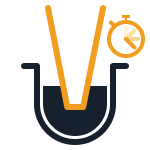
The pipette submerges into the liquid at this speed. |
Delay after submerging |
The pipette delays a specified amount of time:
|

Mix liquid |
The pipette mixes liquid inside the well before an aspirate or after a dispense. |

Pre-wet tip |
The pipette pre-wets the attached tip before aspirating liquid. |

Aspirate flow rate |
|

Dispense flow rate |
|

Retract position |
The pipette retracts from the liquid and moves to this position. |
|
Retract speed |
The pipette retracts from the liquid at the specified speed. |
Push out |
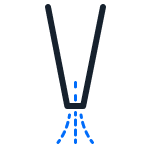
|

Touch tip |
The pipette touches the attached tip to the sides of a well to remove droplets. |

Air gap |
|

Blow out |
The pipette dispenses a larger amount of air to ensure all liquid leaves the tip. |
A liquid class definition specifies values for each property. When your Flex protocol includes a liquid class, these property values automatically define transfer behavior. For example, if you use the transfer_with_liquid_class() command to transfer a viscous liquid, the pipette submerges into the liquid and aspirates more slowly to prevent air bubbles from forming.
Read more about using liquid classes in the next section.